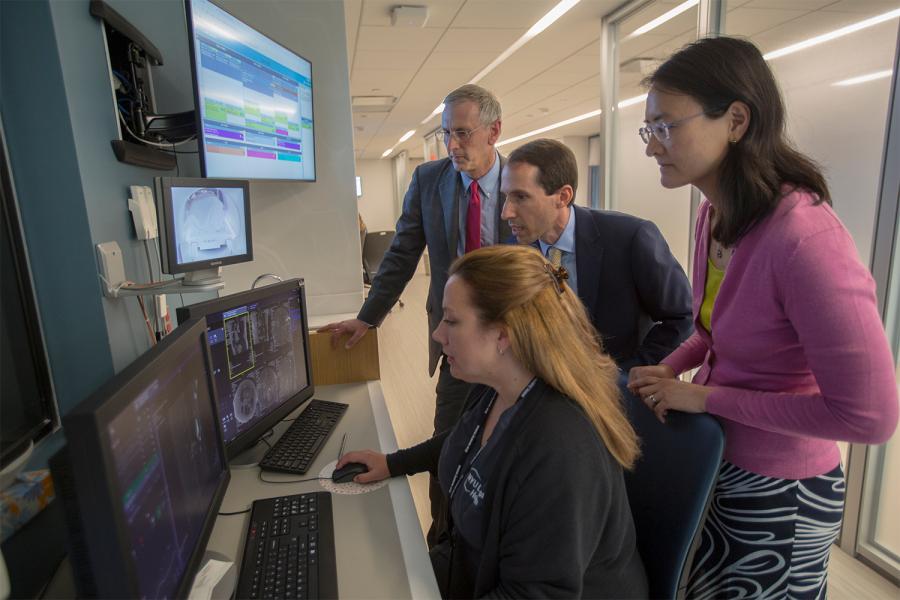
Daniel K Sodickson

Biosketch / Results /

Daniel K Sodickson, M.D., Ph.D.

Associate Professor; Vice Chairman of Research; Director Center for Biomedical Imaging
Departments of Radiology (Radiology) and Physiology and Neuroscience (Phys/Neuro)

Contact Info

Address
660 First Ave
Fourth Floor Floor 4th Floor Room Room 407
660 First Avenue
New York, NY 10016

212-263-4844
Daniel.Sodickson@NYUMC.ORG

« Back to Results

Education

1994 — Massachusetts Institute of Technology, Graduate Education

« Back to Results

Research Interests

My research is primarily addressed at the development of new techniques for biomedical imaging. The broad aim of this work is to see what has previously been invisible in order to improve human health. One particular area of interest is ?parallel MRI?: the use of radiofrequency (RF) coil arrays to acquire MRI data in parallel rather than in a traditional sequential fashion, thereby enabling imaging at previously inaccessible speeds. I have played a leading role in the genesis and subsequent development of this field, and my research group has contributed both to basic development and to multifaceted clinical implementations of parallel imaging techniques and technologies. In recent years, my laboratory has also begun to explore other uses for RF coil arrays including a) the use of multiple radiofrequency transmitters to tailor MR signal excitation, and b) potential new modalities for imaging of tissue electrical properties which have previously eluded accurate noninvasive mapping. My colleagues and I are actively engaged in the development of new rapid imaging techniques using nonlinear image reconstruction algorithms such as compressed sensing. For example, we are combining compressed sensing with parallel imaging in the pursuit of a few-minute comprehensive cardiac MR examination, which would enable rapid assessments of cardiovascular health with rich information content and extremely simple workflow. Both personally and in my capacity as Director of the Bernard and Irene Schwartz Center for Biomedical Imaging at NYU, I have a strong interest in MR imaging and spectroscopy at high magnetic field strengths. Much of my current research seeks to meet the challenges and realize the promise of ultra-high-field MR, through the development of novel detector and transmitter designs as well as through the generation of new image contrast. As Vice-Chair for Research in the Department of Radiology, I have also overseen the development of a new translational imaging research program, one cornerstone of which will be a new combined MR-PET scanner to be installed at our Center for Biomedical Imaging in 2012. Consequently, multimodality imaging will serve as the focus of new personal and institutional research directions in the future.

« Back to Results

All data from NYU Health Sciences Library Faculty Bibliography — -

Contact:
http://hsl.med.nyu.edu/faculty-bibliography-search#about

Specific absorption rate benefits of including measured electric field interactions in parallel excitation pulse design
Deniz, Cem Murat; Alon, Leeor; Brown, Ryan; Sodickson, Daniel K; Zhu, Yudong
2012 Jan;67(1):164-174, Magnetic resonance in medicine
Specific absorption rate management and excitation fidelity are key aspects of radiofrequency pulse design for parallel transmission at ultra-high magnetic field strength. The design of radiofrequency pulses for multiple channels is often based on the solution of regularized least-squares optimization problems for which a regularization term is typically selected to control the integrated or peak pulse waveform amplitude. Unlike single-channel transmission, the specific absorption rate of parallel transmission is significantly influenced by interferences between the electric fields associated with the individual transmission elements, which a conventional regularization term does not take into account. This work explores the effects upon specific absorption rate of incorporating experimentally measurable electric field interactions into parallel transmission pulse design. Results of numerical simulations and phantom experiments show that the global specific absorption rate during parallel transmission decreases when electric field interactions are incorporated into pulse design optimization. The results also show that knowledge of electric field interactions enables robust prediction of the net power delivered to the sample or subject by parallel radiofrequency pulses before they are played out on a scanner. Magn Reson Med, 2011. (c) 2011 Wiley-Liss, Inc
— id: 147689, year: 2012, vol: 67, page: 164, stat: Journal Article,

A versatile flow phantom for intravoxel incoherent motion MRI
Cho GY; Kim S; Jensen JH; Storey P; Sodickson DK; Sigmund EE
2011 Nov 23;:?-?, Magnetic resonance in medicine
Although there have been many advancements in cancer research, much is still unknown about the heterogeneous tumor microenvironment. Diffusion-weighted MRI has proven to be a viable and versatile microstructural probe. Diffusion-weighted sequences specifically sensitive to intravoxel incoherent motion (IVIM) have seen a recent resurgence of interest as they promise to provide a valuable window on the vascular microenvironment. To understand, test, and optimize IVIM-sensitive approaches, a complex flow phantom was constructed to mimic certain characteristics of the tumor microenvironment such as tortuous microvasculature, heterogeneous vascular permeability, and interstitial fluid pressure buildup. Results using this phantom on a clinical scanner platform confirmed IVIM sensitivity to microscopic flow effects. Biexponential fitting of signal decay curves enabled quantitative extraction of perfusion fraction, IVIM-related pseudodiffusivity, and tissue diffusivity. Parametric maps were also generated, illustrating the potential utility of IVIM-sensitive imaging in clinical settings. The flow phantom proved to be an effective test-bed for validating and optimizing the IVIM-MRI technique to provide surrogate markers for microvascular properties. Magn Reson Med, 2011. (c) 2011 Wiley Periodicals, Inc
— id: 149836, year: 2011, vol: , page: ?, stat: Journal Article,

Accelerated cardiac T(2) mapping using breath-hold multiecho fast spin-echo pulse sequence with k-t FOCUSS
Feng L; Otazo R; Jung H; Jensen JH; Ye JC; Sodickson DK; Kim D
2011 Jun;65(6):1661-19 L, Magnetic resonance in medicine
Cardiac T(2) mapping is a promising method for quantitative assessment of myocardial edema and iron overload. We have developed a new multiecho fast spin echo (ME-FSE) pulse sequence for breath-hold T(2) mapping with acceptable spatial resolution. We propose to further accelerate this new ME-FSE pulse sequence using k-t focal underdetermined system solver adapted with a framework that uses both compressed sensing and parallel imaging (e.g., sensitivity encoding) to achieve higher spatial resolution. We imaged 12 control subjects in midventricular short-axis planes and compared the accuracy of T(2) measurements obtained using ME-FSE with generalized autocalibrating partially parallel acquisitions and ME-FSE with k-t focal underdetermined system solver. For image reconstruction, we used a bootstrapping two-step approach, where in the first step fast Fourier transform was used as the sparsifying transform and in the final step principal component analysis was used as the sparsifying transform. When compared with T(2) measurements obtained using generalized autocalibrating partially parallel acquisitions, T(2) measurements obtained using k-t focal underdetermined system solver were in excellent agreement (mean difference = 0.04 msec; upper/lower 95% limits of agreement were 2.26/-2.19 msec, respectively). The proposed accelerated ME-FSE pulse sequence with k-t focal underdetermined system solver is a promising investigational method for rapid T(2) measurement of the heart with relatively high spatial resolution (1.7 x 1.7 mm(2) ). Magn Reson Med, 2011. (c) 2011 Wiley-Liss, Inc
— id: 127198, year: 2011, vol: 65, page: 1661, stat: Journal Article,

TROMBONE: T(1) -relaxation-oblivious mapping of transmit radio-frequency field (B(1) ) for MRI at high magnetic fields
Fleysher, Roman; Fleysher, Lazar; Inglese, Matilde; Sodickson, Daniel
2011 Aug;66(2):483-491, Magnetic resonance in medicine
Fast, 3D radio-frequency transmit field (B(1) ) mapping is important for parallel transmission, spatially selective pulse design and quantitative MRI applications. It has been shown that actual flip angle imaging-two interleaved spoiled gradient recalled echo images acquired in steady state with two very short time delays (TR(1) , TR(2) )-is an attractive method of B(1) mapping. Herein, we describe the TROMBONE method that efficiently integrates actual flip angle imaging with EPI imaging, alleviates very short TR requirement of actual flip angle imaging and through their synergy yields up to 16 times higher precision in B(1) estimation in the same experimental time. High precision of TROMBONE can be traded for faster scans. The map of B(1) reconstructed from the ratio of intensities of two images is insensitive to longitudinal relaxation time (T(1) ) in the physiologically relevant range. A table of the optimal acquisition protocol parameters for various target experimental conditions is provided. Magn Reson Med, 2011. (c) 2011 Wiley-Liss, Inc
— id: 135536, year: 2011, vol: 66, page: 483, stat: Journal Article,

Ideal current patterns yielding optimal signal-to-noise ratio and specific absorption rate in magnetic resonance imaging: Computational methods and physical insights
Lattanzi R; Sodickson DK
2011 Nov 29;:?-?, Magnetic resonance in medicine
At high and ultra-high magnetic field strengths, understanding interactions between tissues and the electromagnetic fields generated by radiofrequency coils becomes crucial for safe and effective coil design as well as for insight into limits of performance. In this work, we present a rigorous electrodynamic modeling framework, using dyadic Green's functions, to derive the electromagnetic field in homogeneous spherical and cylindrical samples resulting from arbitrary surface currents in the presence or absence of a surrounding radiofrequency shield. We show how to calculate ideal current patterns that result in the highest possible signal-to-noise ratio (ultimate intrinsic signal-to-noise ratio) or the lowest possible radiofrequency power deposition (ultimate intrinsic specific absorption rate) compatible with electrodynamic principles. We identify familiar coil designs within optimal current patterns at low to moderate field strength, thereby establishing and explaining graphically the near-optimality of traditional surface and volume quadrature designs. We also document the emergence of less familiar patterns, e.g., involving substantial electric- as well as magnetic-dipole contributions, at high field strength. Performance comparisons with particular coil array configurations demonstrate that optimal performance may be approached with finite arrays if ideal current patterns are used as a guide for coil design. Magn Reson Med, 2011. (c) 2011 Wiley Periodicals, Inc
— id: 149835, year: 2011, vol: , page: ?, stat: Journal Article,

Articular Cartilage: In Vivo Diffusion-Tensor Imaging
Raya JG; Horng A; Dietrich O; Krasnokutsky S; Beltran LS; Storey P; Reiser MF; Recht MP; Sodickson DK; Glaser C
2011 Feb;262(2):550-559, Radiology
Purpose:To investigate technical feasibility, test-retest reproducibility, and the ability to differentiate healthy subjects from subjects with osteoarthritis (OA) with diffusion-tensor (DT) imaging parameters and T2 relaxation time.Materials and Methods:This study was approved by the institutional review board and was HIPAA compliant. All subjects provided written informed consent. DT imaging parameters and T2 (resolution = 0.6 x 0.6 x 2 mm) of patellar cartilage were measured at 7.0 T in 16 healthy volunteers and 10 patients with OA with subtle inhomogeneous signal intensity but no signs of cartilage erosion at clinical magnetic resonance (MR) imaging. Ten volunteers were imaged twice to determine test-retest reproducibility. After cartilage segmentation, maps of mean apparent diffusion coefficient (ADC), fractional anisotropy (FA), and T2 relaxation time were calculated. Differences for ADC, FA, and T2 between the healthy and OA populations were assessed with nonparametric tests. The ability of each MR imaging parameter to help discriminate healthy subjects from subjects with OA was assessed by using receiver operating characteristic curve analysis.Results:Test-retest reproducibility was better than 10% for mean ADC (8.1%), FA (9.7%), and T2 (5.9%). Mean ADC and FA differed significantly (P < .01) between the OA and healthy populations, but T2 did not. For ADC, the optimal threshold to differentiate both populations was 1.2 x 10(-3) mm(2)/sec, achieving specificity of 1.0 (16 of 16) and sensitivity of 0.80 (eight of 10). For FA, the optimal threshold was 0.25, yielding specificity of 0.88 (14 of 16) and sensitivity of 0.80 (eight of 10). T2 showed poor differentiation between groups (optimal threshold = 22.9 msec, specificity = 0.69 [11 of 16], sensitivity = 0.60 [six of 10]).Conclusion:In vivo DT imaging of patellar cartilage is feasible, has good test-retest reproducibility, and may be accurate in discriminating healthy subjects from subjects with OA. ADC and FA are two promising biomarkers for early OA.(c) RSNA, 2011
— id: 149837, year: 2011, vol: 262, page: 550, stat: Journal Article,

Intravoxel incoherent motion imaging of tumor microenvironment in locally advanced breast cancer
Sigmund, E E; Cho, G Y; Kim, S; Finn, M; Moccaldi, M; Jensen, J H; Sodickson, D K; Goldberg, J D; Formenti, S; Moy, L
2011 May;65(5):1437-1447, Magnetic resonance in medicine
Diffusion-weighted imaging plays important roles in cancer diagnosis, monitoring, and treatment. Although most applications measure restricted diffusion by tumor cellularity, diffusion-weighted imaging is also sensitive to vascularity through the intravoxel incoherent motion effect. Hypervascularity can confound apparent diffusion coefficient measurements in breast cancer. We acquired multiple b-value diffusion-weighted imaging at 3 T in a cohort of breast cancer patients and performed biexponential intravoxel incoherent motion analysis to extract tissue diffusivity (D(t) ), perfusion fraction (f(p) ), and pseudodiffusivity (D(p) ). Results indicated significant differences between normal fibroglandular tissue and malignant lesions in apparent diffusion coefficient mean (+/-standard deviation) values (2.44 +/- 0.30 vs. 1.34 +/- 0.39 mum(2) /msec, P < 0.01) and D(t) (2.36 +/- 0.38 vs. 1.15 +/- 0.35 mum(2) /msec, P < 0.01). Lesion diffusion-weighted imaging signals demonstrated biexponential character in comparison to monoexponential normal tissue. There is some differentiation of lesion subtypes (invasive ductal carcinoma vs. other malignant lesions) with f(p) (10.5 +/- 5.0% vs. 6.9 +/- 2.9%, P = 0.06), but less so with D(t) (1.14 +/- 0.32 mum(2) /msec vs. 1.18 +/- 0.52 mum(2) /msec, P = 0.88) and D(p) (14.9 +/- 11.4 mum(2) /msec vs. 16.1 +/- 5.7 mum(2) /msec, P = 0.75). Comparison of intravoxel incoherent motion biomarkers with contrast enhancement suggests moderate correlations. These results suggest the potential of intravoxel incoherent motion vascular and cellular biomarkers for initial grading, progression monitoring, or treatment assessment of breast tumors. Magn Reson Med, 2011. (c) 2011 Wiley-Liss, Inc
— id: 131795, year: 2011, vol: 65, page: 1437, stat: Journal Article,

Exploiting sparsity to accelerate noncontrast MR angiography in the context of parallel imaging
Storey P; Otazo R; Lim RP; Kim S; Fleysher L; Oesingmann N; Lee VS; Sodickson DK
2011 Aug 29;:?-?, Magnetic resonance in medicine
Noncontrast techniques for peripheral MR angiography are receiving renewed interest because of safety concerns about the use of gadolinium in patients with renal insufficiency. One class of techniques involves subtraction of dark-blood images acquired during fast systolic flow from bright-blood images obtained during slow diastolic flow. The goal of this work was to determine whether the inherent sparsity of the difference images could be exploited to achieve greater acceleration without loss of image quality in the context of generalized autocalibrating partially parallel acquisition (GRAPPA). It is shown that noise amplification at high acceleration factors can be reduced by performing subtraction on the raw data, before calculation of the GRAPPA weights, rather than on the final magnitude images. Use of the difference data to calculate the GRAPPA weights decreases the geometry factor (g-factor), because the difference data represent a sparse image set. This demonstrates an inherent property of GRAPPA and does not require the use of compressed sensing. Application of this approach to highly accelerated data from healthy volunteers resulted in similar depiction of large arteries to that obtained with low acceleration and standard reconstruction. However, visualization of very small vessels and arterial branches was compromised. Magn Reson Med, 2011. (c) 2011 Wiley-Liss, Inc
— id: 149838, year: 2011, vol: , page: ?, stat: Journal Article,

Cutoff-Free Traveling Wave NMR
Tang, Joel A.; Wiggins, Graham C.; Sodickson, Daniel K.; Jerschow, Alexej
2011 SEP ;38A(5):253-267, Concepts in magnetic resonance. Pt. A. Bridging education & research
Recently, the concept of traveling wave NMR/MRI was introduced by Brunner et al. (Nature 2009;457:994-992), who demonstrated MR images acquired using radio frequency (RF) waves propagating down the bore of a MR scanner which acts as a waveguide. One of the significant limitations of this approach is that each bore has a specific cutoff frequency, which can be higher than most Larmor frequencies at the magnetic field strengths commonly in use for MR imaging and spectroscopy today. One can overcome this limitation by using a central conductor in the waveguide and thereby converting it in to a transmission line which has no cutoff frequency. Broadband propagation of waves through the sample thus becomes possible. NMR spectra and images with such an arrangement are presented and traveling wave behavior is demonstrated. In addition to facilitating NMR spectroscopy and imaging in smaller bores via traveling waves, this approach also allows one to perform multinuclear traveling wave experiments (an example of which is shown), and to study otherwise difficult-to-access samples in unusual geometries. (C) 2011 Wiley Periodicals, Inc. Concepts Magn Reson Part A 38: 253-267, 2011
— id: 147728, year: 2011, vol: 38A, page: 253, stat: Journal Article,

Extended para-hydrogenation monitored by NMR spectroscopy
Tang, Joel A; Gruppi, Francesca; Fleysher, Roman; Sodickson, Daniel K; Canary, James W; Jerschow, Alexej
2011 Jan 21;47(3):958-960, Chemical communications (Cambridge, England)
A system that provides a sustained hyperpolarized (1)H NMR signal in an aqueous medium is reported. The enhanced signal lasts much longer than typical (1)H T(1) values, uncovering new possibilities for implementing hyperpolarized (1)H NMR/MRI experiments or performing kinetics studies that would not otherwise be detectable
— id: 134194, year: 2011, vol: 47, page: 958, stat: Journal Article,

Thalamic resting-state functional networks: disruption in patients with mild traumatic brain injury
Tang, Lin; Ge, Yulin; Sodickson, Daniel K; Miles, Laura; Zhou, Yongxia; Reaume, Joseph; Grossman, Robert I
2011 Sep;260(3):831-840, Radiology
Purpose: To explore the neural correlates of the thalamus by using resting-state functional magnetic resonance (MR) imaging and to investigate whether thalamic resting-state networks (RSNs) are disrupted in patients with mild traumatic brain injury (MTBI). Materials and Methods: This HIPAA-compliant study was approved by the institutional review board, and written informed consent was obtained from 24 patients with MTBI and 17 healthy control subjects. The patients had varying degrees of symptoms, with a mean disease duration of 22 days. The resting-state functional MR imaging data were analyzed by using a standard seed-based whole-brain correlation method to characterize thalamic RSNs. Student t tests were used to perform comparisons. The association between thalamic RSNs and performance on neuropsychologic and neurobehavioral measures was also investigated in patients with MTBI by using Spearman rank correlation. Results: A normal pattern of thalamic RSNs was demonstrated in healthy subjects. This pattern was characterized as representing relatively symmetric and restrictive functional thalamocortical connectivity, suggesting an inhibitory property of the thalamic neurons during the resting state. This pattern was disrupted, with significantly increased thalamic RSNs (P </= .005) and decreased symmetry (P = .03) in patients with MTBI compared with healthy control subjects. Increased functional thalamocortical redistributive connectivity was correlated with diminished neurocognitive functions and clinical symptoms in patients with MTBI. Conclusion: These findings of abnormal thalamic RSNs lend further support to the presumed subtle thalamic injury in patients with MTBI. Resting-state functional MR imaging can be used as an additional imaging modality for detection of thalamocortical connectivity abnormalities and for better understanding of the complex persistent postconcussive syndrome. (c) RSNA, 2011
— id: 136638, year: 2011, vol: 260, page: 831, stat: Journal Article,

Single breathhold noncontrast thoracic MRA using highly accelerated parallel imaging with a 32-element coil array
Xu J; McGorty KA; Lim RP; Bruno M; Babb JS; Srichai MB; Kim D; Sodickson DK
2011 Dec 6;:?-?, Journal of magnetic resonance imaging
PURPOSE: To evaluate the feasibility of performing single breathhold three-dimensional (3D) thoracic noncontrast MR angiography (NC-MRA) using highly accelerated parallel imaging. MATERIALS AND METHODS: We developed a single breathhold NC MRA pulse sequence using balanced steady state free precession (SSFP) readout and highly accelerated parallel imaging. In 17 subjects, highly accelerated noncontrast MRA was compared against electrocardiogram-triggered contrast-enhanced MRA. Anonymized images were randomized for blinded review by two independent readers for image quality, artifact severity in eight defined vessel segments and aortic dimensions in six standard sites. NC-MRA and CE-MRA were compared in terms of these measures using paired sample t- and Wilcoxon tests. RESULTS: The overall image quality (3.21 +/- 0.68 for NC-MRA versus 3.12 +/- 0.71 for CE-MRA) and artifact (2.87 +/- 1.01 for NC-MRA versus 2.92 +/- 0.87 for CE-MRA) scores were not significantly different, but there were significant differences for the great vessel and coronary artery origins. NC-MRA demonstrated significantly lower aortic diameter measurements compared with CE-MRA; however, this difference was not considered clinically relevant (>3 mm difference) for less than 12% of segments, most commonly at the sinotubular junction. Mean total scan time was significantly lower for NC-MRA compared with CE-MRA (18.2 +/- 6.0 s versus 28.1 +/- 5.4 s, respectively; P < 0.05). CONCLUSION: Single breathhold NC-MRA is feasible and can be a useful alternative for evaluation and follow-up of thoracic aortic diseases. J. Magn. Reson. Imaging 2011;. (c) 2011 Wiley Periodicals, Inc
— id: 149833, year: 2011, vol: , page: ?, stat: Journal Article,

System and SAR characterization in parallel RF transmission
Zhu Y; Alon L; Deniz CM; Brown R; Sodickson DK
2011 Dec 2;:?-?, Magnetic resonance in medicine
The markedly increased degrees of freedom introduced by parallel radiofrequency transmission presents both opportunities and challenges for specific absorption rate (SAR) management. On one hand they enable E-field tailoring and SAR reduction while facilitating excitation profile control. On other hand they increase the complexity of SAR behavior and the risk of inadvertently exacerbating SAR by improper design or playout of radiofrequency pulses. The substantial subject-dependency of SAR in high field magnetic resonance can be a compounding factor. Building upon a linear system concept and a calibration scheme involving a finite number of in situ measurements, this work establishes a clinically applicable method for characterizing global SAR behavior as well as channel-by-channel power transmission. The method offers a unique capability of predicting, for any excitation, the SAR and power consequences that are specific to the subject to be scanned and the MRI hardware. The method was validated in simulation and experimental studies, showing promise as the foundation to a prospective paradigm where power and SAR are not only monitored but, through prediction-guided optimization, proactively managed. Magn Reson Med, 2011. (c) 2011 Wiley Periodicals, Inc
— id: 149834, year: 2011, vol: , page: ?, stat: Journal Article,

Performance evaluation of a 32-element head array with respect to the ultimate intrinsic SNR
Lattanzi, Riccardo; Grant, Aaron K; Polimeni, Jonathan R; Ohliger, Michael A; Wiggins, Graham C; Wald, Lawrence L; Sodickson, Daniel K
2010 Feb;23(2):142-151, NMR in biomedicine
The quality of an RF detector coil design is commonly judged on how it compares with other coil configurations. The aim of this article is to develop a tool for evaluating the absolute performance of RF coil arrays. An algorithm to calculate the ultimate intrinsic signal-to-noise ratio (SNR) was implemented for a spherical geometry. The same imaging tasks modeled in the calculations were reproduced experimentally using a 32-element head array. Coil performance maps were then generated based on the ratio of experimentally measured SNR to the ultimate intrinsic SNR, for different acceleration factors associated with different degrees of parallel imaging. The relative performance in all cases was highest near the center of the samples (where the absolute SNR was lowest). The highest performance was found in the unaccelerated case and a maximum of 85% was observed with a phantom whose electrical properties are consistent with values in the human brain. The performance remained almost constant for 2-fold acceleration, but deteriorated at higher acceleration factors, suggesting that larger arrays are needed for effective highly-accelerated parallel imaging. The method proposed here can serve as a tool for the evaluation of coil designs, as well as a tool to guide the development of original designs which may begin to approach the optimal performance.
— id: 107765, year: 2010, vol: 23, page: 142, stat: Journal Article,

Toward cardiovascular MRI at 7 T: clinical needs, technical solutions and research promises
Niendorf, Thoralf; Sodickson, Daniel K; Krombach, Gabriele A; Schulz-Menger, Jeanette
2010 Dec;20(12):2806-2816, European radiology
OBJECTIVE: To consider potential clinical needs, technical solutions and research promises of ultrahigh-field strength cardiovascular MR (CMR). METHODS: A literature review is given, surveying advantages and disadvantages of CMR at ultrahigh fields (UHF). Key concepts, emerging technologies, practical considerations and applications of UHF CMR are provided. Examples of UHF CMR imaging strategies and their added value are demonstrated, including the numerous unsolved problems. A concluding section explores future directions in UHF CMR. RESULTS: UHF CMR can be regarded as one of the most challenging MRI applications. Image quality achievable at UHF is not always exclusively defined by signal-to-noise considerations. Some of the inherent advantages of UHF MRI are offset by practical challenges. But UHF CMR can boast advantages over its kindred lower field counterparts by trading the traits of high magnetic fields for increased temporal and/or spatial resolution. CONCLUSIONS: CMR at ultrahigh-field strengths is a powerful motivator, since speed and signal may be invested to overcome the fundamental constraints that continue to hamper traditional CMR. If practical challenges can be overcome, UHF CMR will help to open the door to new approaches for basic science and clinical research
— id: 138122, year: 2010, vol: 20, page: 2806, stat: Journal Article,

Accelerated 3D carotid MRI using compressed sensing and parallel imaging
Otazo R.; Feng L.; Lim R.; Duan Q.; Wiggins G.; Sodickson D.K.; Kim D.
2010 ;12:204-205, Journal of cardiovascular magnetic resonance
Introduction: Imaging of the carotid artery with black-blood MRI can be used to identify plaques that are vulnerable for rupture [1, 2]. 3D imaging is particularly interesting to overcome the SNR and volumetric coverage limitations of 2D multi-slice techniques. However, 3D scans are more susceptible to motion artifacts, particularly swallowing-related artifacts, due to the longer acquisition times [3]. Parallel imaging can be used to accelerate the acquisition, but acceleration is limited by noise amplification. An alternative acceleration technique is compressed sensing (CS) [4], where image compressibility can be exploited to undersample k-space without losing image information. 3D imaging is a natural candidate for CS, since higher dimensional data sets increase sparsity. We propose to combine CS and parallel imaging to increase the acceleration rate for 3D carotid imaging. Purpose: Evaluate the feasibility of highly-accelerated 3D carotid MRI using CS and parallel imaging. Methods: 3D carotid MRI was performed in a healthy volunteer on a 3 T scanner (Siemens; Tim-Trio) using a custom 8-channel carotid coil array. Fully-sampled 3D fast spin echo data were acquired with T1-weighting. The relevant imaging parameters include: TE = 12 ms, TR = 800 ms, scan-time = 15 min, FOV = 190 mm x143 mm x 44 mm, image-resolution = 0.3 mm x 0.3 mm x 2 mm. Acceleration was simulated by decimating the fully-sampled data along the phase-encoding (ky) and partition-encoding (kz) dimensions by factors R = 4, 6 and 8, using a random undersampling pattern to generate the required incoherence for CS. Combination of CS and parallel imaging was performed using a single joint reconstruction algorithm (JOCS: joint CS [5]) by enforcing joint sparsity on the multicoil images in order to exploit k-space redundancy and incoherence along the coil dimension. Finite differences along x, y and z were employed to sparsify the 3D data set. A standard GRAPPA reconstruction with simulated acceleration R = 4(2 x 2) was also performed for comparison purposes. Results: Fig. 1 shows reconstructed images in an axial view and Table 1 shows the corresponding root-mean-square-error (RMSE) values. JOCS presented improved image quality over GRAPPA, which yielded more noise. Compared with R = 4, acceleration factors R = 6 and R = 8 presented more blurring and change of contrast in regions with low-value finitedifferences, which are challenging for JOCS reconstruction. Fig. 2 shows intensity profiles through a carotid vessel. JOCS with (Figure Presented) (Figure Presented) R = 4 and R = 6 presented adequate profiles, whereas for R = 8 the epithelium-tissue border was considerably blurred. Conclusion: JOCS enables higher accelerations than GRAPPA for 3D carotid imaging, which may markedly reduce sensitivity to motion. Future work will explore the use of geometricallyoriented wavelets to further improve image sparsity
— id: 135280, year: 2010, vol: 12, page: 204, stat: Journal Article,

Highly-accelerated first-pass cardiac perfusion MRI using compressed sensing and parallel imaging
Otazo R.; Kim D.; Axel L.; Sodickson D.K.
2010 ;12:62-62, Journal of cardiovascular magnetic resonance
Introduction: Robust implementation of first-pass cardiac perfusion MRI for clinical use can be particularly challenging due to competing constraints of spatial and temporal resolution, and spatial coverage [1]. k-t SENSE [2] can be used to achieve high accelerations, but dynamic training data are required which reduces the effective acceleration rate. An alternative acceleration technique is compressed sensing (CS) [3], where spatial and temporal correlations result in sparsity of image series content, which may in turn be exploited to achieve high levels of undersampling without losing image information. We have recently presented the combination of compressed sensing and parallel imaging (JOCS: JOint-CS [4]) to increase the acceleration rate of CS alone. In this work, we demonstrate first-pass cardiac perfusion MRI with whole-heart coverage and high spatial and temporal resolution using the JOCS technique. Purpose: Evaluate the feasibility of highly-accelerated first-pass cardiac perfusion MRI with whole-heart coverage per heartbeat using JOCS. Methods: First-pass cardiac perfusion MRI with 0.1 mmol/kg of Gd-DTPA (Magnevist) was performed in two healthy volunteers and one patient with coronary artery disease. A modified multislice TurboFLASH sequence was employed on a whole-body 3 T scanner (Siemens;Tim-Trio) using the 12-element body matrix coil array. The relevant imaging parameters include: FOV = 320 mm x 320 mm, image-resolution = 1.7 mm x 1.7 mm, slice-thickness = 8 mm, TE/TR = 1.3 ms/2.5 ms, repetitions = 40. Acceleration was accomplished using ky-t random undersampling to produce the required incoherence. Breath-hold measurements with acceleration factor of R = 8 (allowing 10 (Figure presented) (Figure presented) acquired slices per heartbeat, temporal-resolution = 60 ms/slice) were performed. In the patient, delayed-enhancement images were obtained using a phase-sensitive inversion recovery (PSIR) [6] pulse sequence, 15 minutes after the administration of the contrast agent. Image reconstruction was performed using the JOCS algorithm [5]. A Fourier transform along the time dimension and finite differences along the spatial dimensions were used as sparsifying transforms. Results: Fig. 1 shows the reconstructed images (10 slices) for the peak blood and peak myocardial wall enhancement phases for one volunteer study. The reconstructed images covered most of the heart with adequate blood and myocardial wall enhancement and good image quality. Fig. 2 shows perfusion images at peak myocardial wall enhancement in three short-axis views (mid-to-apical) with perfusion defects for the patient study. The corresponding PSIR delayed-enhancement images show myocardial scarring regions that correlate well with the perfusion defect regions. Conclusion: JOCS enables first-pass cardiac perfusion MRI studies with whole-heart coverage and high spatial (<2 mm) and temporal (60 ms/slice) resolution. Future work will explore 3D imaging and the use of larger numbers of coils
— id: 135284, year: 2010, vol: 12, page: 62, stat: Journal Article,

Combination of compressed sensing and parallel imaging for highly accelerated first-pass cardiac perfusion MRI
Otazo, Ricardo; Kim, Daniel; Axel, Leon; Sodickson, Daniel K
2010 Sep;64(3):767-776, Magnetic resonance in medicine
First-pass cardiac perfusion MRI is a natural candidate for compressed sensing acceleration since its representation in the combined temporal Fourier and spatial domain is sparse and the required incoherence can be effectively accomplished by k-t random undersampling. However, the required number of samples in practice (three to five times the number of sparse coefficients) limits the acceleration for compressed sensing alone. Parallel imaging may also be used to accelerate cardiac perfusion MRI, with acceleration factors ultimately limited by noise amplification. In this work, compressed sensing and parallel imaging are combined by merging the k-t SPARSE technique with sensitivity encoding (SENSE) reconstruction to substantially increase the acceleration rate for perfusion imaging. We also present a new theoretical framework for understanding the combination of k-t SPARSE with SENSE based on distributed compressed sensing theory. This framework, which identifies parallel imaging as a distributed multisensor implementation of compressed sensing, enables an estimate of feasible acceleration for the combined approach. We demonstrate feasibility of 8-fold acceleration in vivo with whole-heart coverage and high spatial and temporal resolution using standard coil arrays. The method is relatively insensitive to respiratory motion artifacts and presents similar temporal fidelity and image quality when compared to Generalized autocalibrating partially parallel acquisitions (GRAPPA) with 2-fold acceleration
— id: 138195, year: 2010, vol: 64, page: 767, stat: Journal Article,

Electrodynamic constraints on homogeneity and radiofrequency power deposition in multiple coil excitations
Lattanzi, Riccardo; Sodickson, Daniel K; Grant, Aaron K; Zhu, Yudong
2009 Feb;61(2):315-334, Magnetic resonance in medicine
The promise of increased signal-to-noise ratio and spatial/spectral resolution continues to drive MR technology toward higher magnetic field strengths. SAR management and B1 inhomogeneity correction become critical issues at the high frequencies associated with high field MR. In recent years, multiple coil excitation techniques have been recognized as potentially powerful tools for controlling specific absorption rate (SAR) while simultaneously compensating for B1 inhomogeneities. This work explores electrodynamic constraints on transmit homogeneity and SAR, for both fully parallel transmission and its time-independent special case known as radiofrequency shimming. Ultimate intrinsic SAR--the lowest possible SAR consistent with electrodynamics for a particular excitation profile but independent of transmit coil design--is studied for different field strengths, object sizes, and pulse acceleration factors. The approach to the ultimate intrinsic limit with increasing numbers of finite transmit coils is also studied, and the tradeoff between homogeneity and SAR is explored for various excitation strategies. In the case of fully parallel transmission, ultimate intrinsic SAR shows flattening or slight reduction with increasing field strength, in contradiction to the traditionally cited quadratic dependency, but consistent with established electrodynamic principles
— id: 91889, year: 2009, vol: 61, page: 315, stat: Journal Article,

Superresolution parallel magnetic resonance imaging: application to functional and spectroscopic imaging
Otazo, Ricardo; Lin, Fa-Hsuan; Wiggins, Graham; Jordan, Ramiro; Sodickson, Daniel; Posse, Stefan
2009 Aug 1;47(1):220-230, Neuroimage
Standard parallel magnetic resonance imaging (MRI) techniques suffer from residual aliasing artifacts when the coil sensitivities vary within the image voxel. In this work, a parallel MRI approach known as Superresolution SENSE (SURE-SENSE) is presented in which acceleration is performed by acquiring only the central region of k-space instead of increasing the sampling distance over the complete k-space matrix and reconstruction is explicitly based on intra-voxel coil sensitivity variation. In SURE-SENSE, parallel MRI reconstruction is formulated as a superresolution imaging problem where a collection of low resolution images acquired with multiple receiver coils are combined into a single image with higher spatial resolution using coil sensitivities acquired with high spatial resolution. The effective acceleration of conventional gradient encoding is given by the gain in spatial resolution, which is dictated by the degree of variation of the different coil sensitivity profiles within the low resolution image voxel. Since SURE-SENSE is an ill-posed inverse problem, Tikhonov regularization is employed to control noise amplification. Unlike standard SENSE, for which acceleration is constrained to the phase-encoding dimension/s, SURE-SENSE allows acceleration along all encoding directions--for example, two-dimensional acceleration of a 2D echo-planar acquisition. SURE-SENSE is particularly suitable for low spatial resolution imaging modalities such as spectroscopic imaging and functional imaging with high temporal resolution. Application to echo-planar functional and spectroscopic imaging in human brain is presented using two-dimensional acceleration with a 32-channel receiver coil
— id: 106569, year: 2009, vol: 47, page: 220, stat: Journal Article,

Highly accelerated cardiovascular MR imaging using many channel technology: concepts and clinical applications
Niendorf, Thoralf; Sodickson, Daniel K
2008 Jan;18(1):87-102, European radiology
Cardiovascular magnetic resonance imaging (CVMRI) is of proven clinical value in the non-invasive imaging of cardiovascular diseases. CVMRI requires rapid image acquisition, but acquisition speed is fundamentally limited in conventional MRI. Parallel imaging provides a means for increasing acquisition speed and efficiency. However, signal-to-noise (SNR) limitations and the limited number of receiver channels available on most MR systems have in the past imposed practical constraints, which dictated the use of moderate accelerations in CVMRI. High levels of acceleration, which were unattainable previously, have become possible with many-receiver MR systems and many-element, cardiac-optimized RF-coil arrays. The resulting imaging speed improvements can be exploited in a number of ways, ranging from enhancement of spatial and temporal resolution to efficient whole heart coverage to streamlining of CVMRI work flow. In this review, examples of these strategies are provided, following an outline of the fundamentals of the highly accelerated imaging approaches employed in CVMRI. Topics discussed include basic principles of parallel imaging; key requirements for MR systems and RF-coil design; practical considerations of SNR management, supported by multi-dimensional accelerations, 3D noise averaging and high field imaging; highly accelerated clinical state-of-the art cardiovascular imaging applications spanning the range from SNR-rich to SNR-limited; and current trends and future directions
— id: 94804, year: 2008, vol: 18, page: 87, stat: Journal Article,

Comprehensive quantification of signal-to-noise ratio and g-factor for image-based and k-space-based parallel imaging reconstructions
Robson, Philip M; Grant, Aaron K; Madhuranthakam, Ananth J; Lattanzi, Riccardo; Sodickson, Daniel K; McKenzie, Charles A
2008 Oct;60(4):895-907, Magnetic resonance in medicine
Parallel imaging reconstructions result in spatially varying noise amplification characterized by the g-factor, precluding conventional measurements of noise from the final image. A simple Monte Carlo based method is proposed for all linear image reconstruction algorithms, which allows measurement of signal-to-noise ratio and g-factor and is demonstrated for SENSE and GRAPPA reconstructions for accelerated acquisitions that have not previously been amenable to such assessment. Only a simple 'prescan' measurement of noise amplitude and correlation in the phased-array receiver, and a single accelerated image acquisition are required, allowing robust assessment of signal-to-noise ratio and g-factor. The 'pseudo multiple replica' method has been rigorously validated in phantoms and in vivo, showing excellent agreement with true multiple replica and analytical methods. This method is universally applicable to the parallel imaging reconstruction techniques used in clinical applications and will allow pixel-by-pixel image noise measurements for all parallel imaging strategies, allowing quantitative comparison between arbitrary k-space trajectories, image reconstruction, or noise conditioning techniques
— id: 86638, year: 2008, vol: 60, page: 895, stat: Journal Article,

Meeting highlights of the 10th annual scientific sessions of the Society for Cardiovascular Magnetic Resonance and 6th annual meeting of the Working Group for Cardiovascular Magnetic Resonance of the European Society of Cardiology: Rome, Italy, February 2-4, 2007
Friedrich, Matthias G; Kramer, Christopher M; Sodickson, Daniel K; Flamm, Scott D; Buser, Peter; Neubauer, Stefan
2007 Sep 4;50(10):983-987, Journal of the American College of Cardiology
— id: 74000, year: 2007, vol: 50, page: 983, stat: Journal Article,

Perspectives on body MR imaging at ultrahigh field
Hecht, Elizabeth M; Lee, Ray F; Taouli, Bachir; Sodickson, Daniel K
2007 Aug;15(3):449-65, viii, Magnetic resonance imaging clinics of North America
As investigators consider approaching the challenge of MR imaging at field strengths above 3T, do they follow the same paradigm, and continue to work around the same problems they have encountered thus far at 3T, or do they explore other ways of answering the clinical questions more effectively and more comprehensively? The most immediate problems of imaging at ultrahigh field strength are not unfamiliar, as many of them are still pressing issues at 3T: radiofrequency coils, B1 homogeneity, specific absorption rate, safety, B0 field homogeneity, alterations in tissue contrast, and chemical shift. In this article, these issues are briefly reviewed in terms of how they may affect image quality at field strengths beyond 3T. The authors propose various approaches to overcoming the challenges, and discuss potential applications of ultrahigh field MR imaging as it applies to specific abdominal, pelvic, peripheral vascular, and breast imaging protocols
— id: 75452, year: 2007, vol: 15, page: 449, stat: Journal Article,

Parallel magnetic resonance imaging (or, scanners, cell phones, and the surprising guises of modern tomography)
Sodickson, D
2007 JUN ;34(6):2598-2598, Medical physics
— id: 73039, year: 2007, vol: 34, page: 2598, stat: Journal Article,

32-element receiver-coil array for cardiac imaging
Hardy, Christopher J; Cline, Harvey E; Giaquinto, Randy O; Niendorf, Thoralf; Grant, Aaron K; Sodickson, Daniel K
2006 May;55(5):1142-1149, Magnetic resonance in medicine
A lightweight 32-element MRI receiver-coil array was designed and built for cardiac imaging. It comprises an anterior array of 21 copper rings (75 mm diameter) and a posterior array of 11 rings (107 mm diameter) that are arranged in hexagonal lattices so as to decouple nearest neighbors, and curved around the left side of the torso. Imaging experiments on phantoms and human volunteers show that it yields superior performance relative to an eight-element cardiac array as well as a 32-element whole-torso array for both traditional nonaccelerated cardiac imaging and 3D parallel imaging with acceleration factors as high as 16
— id: 71077, year: 2006, vol: 55, page: 1142, stat: Journal Article,

Toward single breath-hold whole-heart coverage coronary MRA using highly accelerated parallel imaging with a 32-channel MR system
Niendorf, Thoralf; Hardy, Christopher J; Giaquinto, Randy O; Gross, Patrick; Cline, Harvey E; Zhu, Yudong; Kenwood, Gontran; Cohen, Shmuel; Grant, Aaron K; Joshi, Sanjay; Rofsky, Neil M; Sodickson, Daniel K
2006 Jul;56(1):167-176, Magnetic resonance in medicine
Coronary MR angiography (CMRA) is generally confined to the acquisition of multiple targeted slabs with coverage dictated by the competing constraints of signal-to-noise ratio (SNR), physiological motion, and scan time. This work addresses these obstacles by demonstrating the technical feasibility of using a 32-channel coil array and receiver system for highly accelerated volumetric breath-hold CMRA. The use of the 32-element array in unaccelerated CMRA studies provided a baseline SNR increase of as much as 40% over conventional cardiac-optimized phased array coils, which resulted in substantially enhanced image quality and improved delineation of the coronary arteries. Modest accelerations were used to reduce breath-hold durations for tailored coverage of the coronary arteries using targeted multi-oblique slabs to as little as 10 s. Finally, high net accelerations were combined with the SNR advantages of a 3D steady-state free precession (SSFP) technique to achieve previously unattainable comprehensive volumetric coverage of the coronary arteries in a single breath-hold. The merits and limitations of this simplified volumetric imaging approach are discussed and its implications for coronary MRA are considered
— id: 71074, year: 2006, vol: 56, page: 167, stat: Journal Article,

Parallel imaging in cardiovascular MRI: methods and applications
Niendorf, Thoralf; Sodickson, Daniel K
2006 May;19(3):325-341, NMR in biomedicine
Cardiovascular MR imaging (CVMR) has become a valuable modality for the non-invasive detection and characterization of cardiovascular diseases. CVMR requires high imaging speed and efficiency, which is fundamentally limited in conventional cardiovascular MRI studies. With the introduction of parallel imaging, alternative means for increasing acquisition speed beyond these limits have become available. In parallel imaging some image data are acquired simultaneously, using RF detector coil sensitivities to encode simultaneous spatial information that complements the information gleaned from sequential application of magnetic field gradients. The resulting improvements in imaging speed can be used in various ways, including shortening long examinations, improving spatial resolution and/or anatomic coverage, improving temporal resolution, enhancing image quality, overcoming physiological constraints, detecting and correcting for physiologic motion, and streamlining work flow. Examples of each of these strategies will be provided in this review. First, basic principles and key concepts of parallel MR are described. Second, practical considerations such as coil array design, coil sensitivity calibrations, customized pulse sequences and tailored imaging parameters are outlined. Next, cardiovascular applications of parallel MR are reviewed, ranging from cardiac anatomical and functional assessment to myocardial perfusion and viability to MR angiography of the coronary arteries and the large vessels. Finally, current trends and future directions in parallel CVMR are considered
— id: 71075, year: 2006, vol: 19, page: 325, stat: Journal Article,

Highly accelerated cardiovascular magnetic resonance imaging: concepts and clinical applications
Niendorf, Thoralf; Sodickson, Dasniel K
2006 ;1:373-376, Conference Proceedings (IEEE Engineering in Medicine & Biology Society)
— id: 112033, year: 2006, vol: 1, page: 373, stat: Journal Article,

An introduction to coil array design for parallel MRI
Ohliger, Michael A; Sodickson, Daniel K
2006 May;19(3):300-315, NMR in biomedicine
The basic principles of radiofrequency coil array design for parallel MRI are described from both theoretical and practical perspectives. Because parallel MRI techniques rely on coil array sensitivities to provide spatial information about the sample, a careful choice of array design is essential. The concepts of coil array spatial encoding are first discussed from four qualitative perspectives. These qualitative descriptions include using coil arrays to emulate spatial harmonics, choosing coils with selective sensitivities to aliased pixels, using coil sensitivities with broad k-space reception profiles, and relying on detector coils to provide a set of generalized projections of the sample. This qualitative discussion is followed by a quantitative analysis of coil arrays, which is discussed in terms of the baseline SNR of the received images as well as the noise amplifications (g-factor) in the reconstructed data. The complications encountered during the experimental evaluation of coil array SNR are discussed, and solutions are proposed. A series of specific array designs are reviewed, with an emphasis on the general design considerations that motivate each approach. Finally, a set of special topics is discussed, which reflect issues that have become important, especially as arrays are being designed for more high-performance applications of parallel MRI. These topics include concerns about the depth penetration of arrays composed of small elements, the use of adaptive arrays for systems with limited receiver channels, the management of inductive coupling between array elements, and special considerations required at high field strengths. The fundamental limits of spatial encoding using coil arrays are discussed, with a primary emphasis on how the determination of these limits impacts the design of optimized arrays. This review is intended to provide insight into how arrays are currently used for parallel MRI and to place into context the new innovations that are to come
— id: 71076, year: 2006, vol: 19, page: 300, stat: Journal Article,

Concentric coil arrays for parallel MRI
Ohliger, Michael A; Greenman, Robert L; Giaquinto, Randy; McKenzie, Charles A; Wiggins, Graham; Sodickson, Daniel K
2005 Nov;54(5):1248-1260, Magnetic resonance in medicine
A new type of coil array is proposed that consists of concentrically placed coil elements, each of which is characterized by symmetrically arranged lobes that have alternating current directions. Symmetries in the coil elements' conductor paths allow for the minimization of mutual inductance and noise correlations. In addition, the concentric arrangement of the coil elements provides spatial encoding capabilities in multiple directions, which is valuable when arrays are used with parallel MRI. Simulations are presented that describe the signal-to-noise ratio (SNR) properties of individual concentric array elements, and a four-element prototype concentric array is constructed. This prototype array is compared experimentally with three alternative four-element array designs. The overall SNR of the concentric array is comparable to the SNR of the competing arrays. Reconstruction of twofold undersampled data using the concentric array yields an average g-factor of less than 1.3 in all directions parallel to the plane of the array. There is some degradation in performance when threefold undersampled data are reconstructed, but the array still shows substantial directional invariance compared to alternative designs. Both fully-sampled and undersampled cardiac images acquired using the concentric array are shown. These results suggest that concentric structures can be useful tools for designing specialized coil arrays for parallel MRI
— id: 71078, year: 2005, vol: 54, page: 1248, stat: Journal Article,

Rapid volumetric MRI using parallel imaging with order-of-magnitude accelerations and a 32-element RF coil array: feasibility and implications
Sodickson, Daniel K; Hardy, Christopher J; Zhu, Yudong; Giaquinto, Randy O; Gross, Patrick; Kenwood, Gontran; Niendorf, Thoralf; Lejay, Hubert; McKenzie, Charles A; Ohliger, Michael A; Grant, Aaron K; Rofsky, Neil M
2005 May;12(5):626-635, Academic radiology
RATIONALE AND OBJECTIVES: Many clinical applications of Magnetic Resonance Imaging are constrained by basic limits on imaging speed. Parallel MRI relaxes these limits by using the sensitivity patterns of arrays of radiofrequency receiver coils to encode spatial information in a manner complementary to traditional encoding with magnetic field gradients. Until now, parallel MRI has been used to achieve modest improvements in imaging speed; order-of-magnitude improvements have been elusive given fundamental losses in signal-to-noise ratio. The goal of this work was to demonstrate that, with appropriate hardware and careful SNR management, rapid volumetric imaging at high accelerations is in fact feasible. MATERIALS AND METHODS: Contrast-enhanced MRI with an axial 3D spoiled gradient echo imaging sequence was performed in healthy adult subjects using a 32-element RF coil array and a prototype 32-channel MR imaging system. Large imaging volumes were prescribed, in place of traditional limited slabs targeted only to suspect regions. RESULTS: As much as 16-fold net accelerations of imaging were achieved repeatably using this approach. The use of large 3D volumes allowed comprehensive anatomical coverage at clinically useful spatial and/or temporal resolution. The need for careful, time-consuming, and subject-specific scan prescription was also eliminated. CONCLUSION: The highly parallel imaging approach presented here allows previously inaccessible volumetric coverage for time-sensitive MRI examinations such as contrast-enhanced MRA, and simultaneously provides a substantially simplified imaging paradigm. The resulting capability for rapid volumetric imaging promises to combine the strengths of MRI with some of the advantages of alternative imaging modalities such as multidetector CT
— id: 71082, year: 2005, vol: 12, page: 626, stat: Journal Article,

Phase-constrained parallel MR image reconstruction
Willig-Onwuachi, Jacob D; Yeh, Ernest N; Grant, Aaron K; Ohliger, Michael A; McKenzie, Charles A; Sodickson, Daniel K
2005 Oct;176(2):187-198, Journal of magnetic resonance
A generalized method for phase-constrained parallel MR image reconstruction is presented that combines and extends the concepts of partial-Fourier reconstruction and parallel imaging. It provides a framework for reconstructing images employing either or both techniques and for comparing image quality achieved by varying k-space sampling schemes. The method can be used as a parallel image reconstruction with a partial-Fourier reconstruction built in. It can also be used with trajectories not readily handled by straightforward combinations of partial-Fourier and SENSE-like parallel reconstructions, including variable-density, and non-Cartesian trajectories. The phase constraint specifies a better-conditioned inverse problem compared to unconstrained parallel MR reconstruction alone. This phase-constrained parallel MRI reconstruction offers a one-step alternative to the standard combination of homodyne and SENSE reconstructions with the added benefit of flexibility of sampling trajectory. The theory of the phase-constrained approach is outlined, and its calibration requirements and limitations are discussed. Simulations, phantom experiments, and in vivo experiments are presented
— id: 71079, year: 2005, vol: 176, page: 187, stat: Journal Article,

Parallel magnetic resonance imaging with adaptive radius in k-space (PARS): constrained image reconstruction using k-space locality in radiofrequency coil encoded data
Yeh, Ernest N; McKenzie, Charles A; Ohliger, Michael A; Sodickson, Daniel K
2005 Jun;53(6):1383-1392, Magnetic resonance in medicine
A parallel image reconstruction algorithm is presented that exploits the k-space locality in radiofrequency (RF) coil encoded data. In RF coil encoding, information relevant to reconstructing an omitted datum rapidly diminishes as a function of k-space separation between the omitted datum and the acquired signal data. The proposed method, parallel magnetic resonance imaging with adaptive radius in k-space (PARS), harnesses this physical property of RF coil encoding via a sliding-kernel approach. Unlike generalized parallel imaging approaches that might typically involve inverting a prohibitively large matrix for arbitrary sampling trajectories, the PARS sliding-kernel approach creates manageable and distributable independent matrices to be inverted, achieving both computational efficiency and numerical stability. An empirical method designed to measure total error power is described, and the total error power of PARS reconstructions is studied over a range of k-space radii and accelerations, revealing 'minimal-error' conditions at comparatively modest k-space radii. PARS reconstructions of undersampled in vivo Cartesian and non-Cartesian data sets are shown and are compared selectively with traditional SENSE reconstructions. Various characteristics of the PARS k-space locality constraint (such as the tradeoff between signal-to-noise ratio and artifact power and the relationship with iterative parallel conjugate gradient approaches or nonparallel gridding approaches) are discussed
— id: 71081, year: 2005, vol: 53, page: 1383, stat: Journal Article,

Inherently self-calibrating non-Cartesian parallel imaging
Yeh, Ernest N; Stuber, Matthias; McKenzie, Charles A; Botnar, Rene M; Leiner, Tim; Ohliger, Michael A; Grant, Aaron K; Willig-Onwuachi, Jacob D; Sodickson, Daniel K
2005 Jul;54(1):1-8, Magnetic resonance in medicine
The use of self-calibrating techniques in parallel magnetic resonance imaging eliminates the need for coil sensitivity calibration scans and avoids potential mismatches between calibration scans and subsequent accelerated acquisitions (e.g., as a result of patient motion). Most examples of self-calibrating Cartesian parallel imaging techniques have required the use of modified k-space trajectories that are densely sampled at the center and more sparsely sampled in the periphery. However, spiral and radial trajectories offer inherent self-calibrating characteristics because of their densely sampled center. At no additional cost in acquisition time and with no modification in scanning protocols, in vivo coil sensitivity maps may be extracted from the densely sampled central region of k-space. This work demonstrates the feasibility of self-calibrated spiral and radial parallel imaging using a previously described iterative non-Cartesian sensitivity encoding algorithm
— id: 71080, year: 2005, vol: 54, page: 1, stat: Journal Article,

Lumped-element planar strip array (LPSA) for parallel MRI
Lee, Ray F; Hardy, Christopher J; Sodickson, Daniel K; Bottomley, Paul A
2004 Jan;51(1):172-183, Magnetic resonance in medicine
The recently introduced planar strip array (PSA) can significantly reduce scan times in parallel MRI by enabling the utilization of a large number of RF strip detectors that are inherently decoupled, and are tuned by adjusting the strip length to integer multiples of a quarter-wavelength (lambda/4) in the presence of a ground plane and dielectric substrate. In addition, the more explicit spatial information embedded in the phase of the signals from the strip array is advantageous (compared to loop arrays) for limiting aliasing artifacts in parallel MRI. However, losses in the detector as its natural resonance frequency approaches the Larmor frequency (where the wavelength is long at 1.5 T) may limit the signal-to-noise ratio (SNR) of the PSA. Moreover, the PSA's inherent lambda/4 structure severely limits our ability to adjust detector geometry to optimize the performance for a specific organ system, as is done with loop coils. In this study we replaced the dielectric substrate with discrete capacitors, which resulted in both SNR improvement and a tunable lumped-element PSA (LPSA) whose dimensions can be optimized within broad constraints, for a given region of interest (ROI) and MRI frequency. A detailed theoretical analysis of the LPSA is presented, including its equivalent circuit, electromagnetic fields, SNR, and g-factor maps for parallel MRI. Two different decoupling schemes for the LPSA are described. A four-element LPSA prototype was built to test the theory with quantitative measurements on images obtained with parallel and conventional acquisition schemes. Magn Reson Med 51:172-183, 2004
— id: 41650, year: 2004, vol: 51, page: 172, stat: Journal Article,

Shortening MR image acquisition time for volumetric interpolated breath-hold examination with a recently developed parallel imaging reconstruction technique: clinical feasibility
McKenzie, Charles A; Lim, Daniel; Ransil, Bernard J; Morrin, Martina; Pedrosa, Ivan; Yeh, Ernest N; Sodickson, Daniel K; Rofsky, Neil M
2004 Feb;230(2):589-594, Radiology
A recently developed parallel magnetic resonance (MR) imaging technique, parallel imaging with an augmented radius in k space, was used to accelerate the volumetric interpolated breath-hold examination (VIBE) performed in 20 patients referred for clinical liver imaging. Nonaccelerated MR images were also acquired in these patients. A five-point scale was used to score the quality of the images. The acceleration resulted in reduced image quality: The nonaccelerated images had a significantly higher (P <.05) mean score--3.8 +/- 0.3 (SD), indicating good quality--than the accelerated images--3.0 +/- 0.3, indicating acceptable quality. However, for three patients who could not hold their breath for the duration necessary for nonaccelerated imaging, less severe breathing artifacts on the accelerated images resulted in improved quality compared with the quality of the nonaccelerated images. Parallel MR imaging-accelerated VIBE may be beneficial for patients who have difficulty sustaining a breath hold for the duration necessary to perform nonaccelerated imaging
— id: 44308, year: 2004, vol: 230, page: 589, stat: Journal Article,

Effects of inductive coupling on parallel MR image reconstructions
Ohliger, Michael A; Ledden, Patrick; McKenzie, Charles A; Sodickson, Daniel K
2004 Sep;52(3):628-639, Magnetic resonance in medicine
Theoretical arguments and experimental results are presented that characterize the impact of inductive coupling on the performance of parallel MRI reconstructions. A simple model of MR signal and noise reception suggests that the intrinsic amount of spatial information available from a given coil array is unchanged in the presence of inductive coupling, as long as the sample remains the dominant source of noise for the coupled array. Any loss of distinctness in the measured coil sensitivities is compensated by information stored in the measured noise correlations. Adjustments to the theory are described to account for preamplifier noise contributions. Results are presented from an experimental system in which preamplifier input impedances are systematically adjusted in order to vary the level of coupling between array elements. Parallel image reconstructions using an array with four different levels of coupling and an acceleration factor up to six show average SNR changes of -7.6% to +7.5%. The modest changes in overall SNR are accompanied by similarly small changes in g-factor. These initial results suggest that moderate amounts of inductive coupling should not have a prohibitive effect on the use of a given coil array for parallel MRI
— id: 71084, year: 2004, vol: 52, page: 628, stat: Journal Article,

Highly parallel volumetric imaging with a 32-element RF coil array
Zhu, Yudong; Hardy, Christopher J; Sodickson, Daniel K; Giaquinto, Randy O; Dumoulin, Charles L; Kenwood, Gontran; Niendorf, Thoralf; Lejay, Hubert; McKenzie, Charles A; Ohliger, Michael A; Rofsky, Neil M
2004 Oct;52(4):869-877, Magnetic resonance in medicine
The improvement of MRI speed with parallel acquisition is ultimately an SNR-limited process. To offset acquisition- and reconstruction-related SNR losses, practical parallel imaging at high accelerations should include the use of a many-element array with a high intrinsic signal-to-noise ratio (SNR) and spatial-encoding capability, and an advantageous imaging paradigm. We present a 32-element receive-coil array and a volumetric paradigm that address the SNR challenge at high accelerations by maximally exploiting multidimensional acceleration in conjunction with noise averaging. Geometric details beyond an initial design concept for the array were determined with the guidance of simulations. Imaging with the support of 32-channel data acquisition systems produced in vivo results with up to 16-fold acceleration, including images from rapid abdominal and MRA studies
— id: 71083, year: 2004, vol: 52, page: 869, stat: Journal Article,

Rapid MR imaging by sensitivity profile indexing and deconvolution reconstruction (SPID)
Azhari, Haim; Sodickson, Daniel K; Edelman, Robert R
2003 Jul;21(6):575-584, Magnetic resonance imaging
A new parallel MR imaging technique, which uses localized information from the elements of a multi-coil array to accelerate imaging, is described. The technique offers an alternative reconstruction approach to currently available techniques (e.g., SMASH and SENSE). Following a partial k-space data acquisition, image reconstruction in this approach proceeds in two steps: first, fitting the measured coil sensitivities to a set of partially localized target functions, a blurred intermediate image of the studied object is produced. Blurring is obtained in a systematic manner, forming images of the studied object convolved with a known convolution kernel. Full spatial resolution is then recovered by deconvolution of the blurred images with the known kernel function. The technique offers flexibility in the arrangement of the acquired signal data k-lines, and a mechanism for controlling reconstruction quality through the convolution the deconvolution procedure. The technique was validated in phantom and in vivo imaging experiments demonstrating high time reduction factors
— id: 71086, year: 2003, vol: 21, page: 575, stat: Journal Article,

Ultimate intrinsic signal-to-noise ratio for parallel MRI: electromagnetic field considerations
Ohliger, Michael A; Grant, Aaron K; Sodickson, Daniel K
2003 Nov;50(5):1018-1030, Magnetic resonance in medicine
A method is described for establishing an upper bound on the spatial encoding capabilities of coil arrays in parallel MRI. Ultimate intrinsic signal-to-noise ratio (SNR), independent of any particular conductor arrangement, is calculated by expressing arbitrary coil sensitivities in terms of a complete set of basis functions that satisfy Maxwell's equations within the sample and performing parallel imaging reconstructions using these basis functions. The dependence of the ultimate intrinsic SNR on a variety of experimental conditions is explored and a physically intuitive explanation for the observed behavior is provided based on a comparison between the electromagnetic wavelength and the distance between aliasing points. Imaging at high field strength, with correspondingly short wavelength, is shown to offer advantages for parallel imaging beyond those already expected due to the larger available spin polarization. One-dimensional undersampling of k-space yields a steep drop in attainable SNR for more than a 5-fold reduction of scan time, while 2D undersampling permits access to much higher degrees of acceleration. Increased tissue conductivity decreases baseline SNR, but improves parallel imaging performance. A procedure is also provided for generating the optimal coil sensitivity pattern for a given acceleration, which will serve as a useful guide for future coil designs
— id: 71085, year: 2003, vol: 50, page: 1018, stat: Journal Article,

State of the art in adrenal imaging
Blake, Michael A; Jhaveri, Kartik S; Sweeney, Ann T; Sodickson, Daniel K; Arellano, Ronald S; Harisinghani, Mukesh G; Boland, Giles W; Mueller, Peter R
2002 May-Jun;31(3):67-78, Current problems in diagnostic radiology
The purposes of this article were to outline the current state of adrenal imaging, to highlight new developments, and to review the current radiologic advances that provide improved functional and structural information about adrenal disorders
— id: 71087, year: 2002, vol: 31, page: 67, stat: Journal Article,

Self-calibrating parallel imaging with automatic coil sensitivity extraction
McKenzie, Charles A; Yeh, Ernest N; Ohliger, Michael A; Price, Mark D; Sodickson, Daniel K
2002 Mar;47(3):529-538, Magnetic resonance in medicine
Calibration of the spatial sensitivity functions of coil arrays is a crucial element in parallel magnetic resonance imaging (PMRI). The most common approach has been to measure coil sensitivities directly using one or more low-resolution images acquired before or after accelerated data acquisition. However, since it is difficult to ensure that the patient and coil array will be in exactly the same positions during both calibration scans and accelerated imaging, this approach can introduce sensitivity miscalibration errors into PMRI reconstructions. This work shows that it is possible to extract sensitivity calibration images directly from a fully sampled central region of a variable-density k-space acquisition. These images have all the features of traditional PMRI sensitivity calibrations and therefore may be used for any PMRI reconstruction technique without modification. Because these calibration data are acquired simultaneously with the data to be reconstructed, errors due to sensitivity miscalibration are eliminated. In vivo implementations of self-calibrating parallel imaging using a flexible coil array are demonstrated in abdominal imaging and in real-time cardiac imaging studies
— id: 71088, year: 2002, vol: 47, page: 529, stat: Journal Article,

Recent advances in image reconstruction, coil sensitivity calibration, and coil array design for SMASH and generalized parallel MRI
Sodickson, Daniel K; McKenzie, Charles A; Ohliger, Michael A; Yeh, Ernest N; Price, Mark D
2002 Jan;13(3):158-163, MAGMA (European Society for Magnetic Resonance in Medicine & Biology)
Parallel magnetic resonance imaging (MRI) techniques use spatial information from arrays of radiofrequency (RF) detector coils to accelerate imaging. A number of parallel MRI techniques have been described in recent years, and numerous clinical applications are currently being explored. The advent of practical parallel imaging presents various challenges for image reconstruction and RF system design. Recent advances in tailored SiMultaneous Acquisition of Spatial Harmonics (SMASH) image reconstructions are summarized. These advances enable robust SMASH imaging in arbitrary image planes with a wide range of coil array geometries. A generalized formalism is described which may be used to understand the relations between SMASH and SENSE, to derive typical implementations of each as special cases, and to form hybrid techniques combining some of the advantages of both. Accurate knowledge of coil sensitivities is crucial for parallel MRI, and errors in calibration represent one of the most common and the most pernicious sources of error in parallel image reconstructions. As one example, motion of the patient and/or the coil array between the sensitivity reference scan and the accelerated acquisition can lead to calibration errors and reconstruction artifacts. Self-calibrating parallel MRI approaches that address this problem by eliminating the need for external sensitivity references are reviewed. The ultimate achievable signal-to-noise ratio (SNR) for parallel MRI studies is closely tied to the geometry and sensitivity patterns of the coil arrays used for spatial encoding. Several parallel imaging array designs that depart from the traditional model of overlapped adjacent loop elements are described
— id: 71089, year: 2002, vol: 13, page: 158, stat: Journal Article,

Coil-by-coil image reconstruction with SMASH
McKenzie, C A; Ohliger, M A; Yeh, E N; Price, M D; Sodickson, D K
2001 Sep;46(3):619-623, Magnetic resonance in medicine
The SiMultaneous Acquisition of Spatial Harmonics (SMASH) technique uses linear combinations of undersampled datasets from the component coils of an RF coil array to reconstruct fully sampled composite datasets in reduced imaging times. In previously reported implementations, SMASH reconstructions were designed to reproduce the images that would otherwise be obtained by simple sums of fully gradient encoded component coil images. This strategy has left SMASH images vulnerable to phase cancellation artifacts when the sensitivities of RF coil array elements are not suitably phase-aligned. In fully gradient encoded imaging schemes these artifacts can be eliminated using a variety of methods for combining the individual coil images, including matched filter combinations as well as sum of squares combinations. Until now, these reconstruction schemes have been unavailable to SMASH reconstructions as SMASH produced a final composite image directly from the raw component coil k-space datasets. This article demonstrates a modification to SMASH that allows reconstruction of a full set of accelerated individual component coil images by fitting component coil sensitivity functions to a complete set of spatial harmonics tailored for each coil in the array. Standard component coil combinations applied to the individual reconstructed images produce final composite images free of phase cancellation artifacts
— id: 71847, year: 2001, vol: 46, page: 619, stat: Journal Article,

Improved spatial harmonic selection for SMASH image reconstructions
McKenzie, C A; Yeh, E N; Sodickson, D K
2001 Oct;46(4):831-836, Magnetic resonance in medicine
The fitting of coil sensitivity functions to spatial harmonics is central to image reconstructions using the simultaneous acquisition of spatial harmonics (SMASH) technique. It has previously been shown that the selection of the set of spatial harmonics used in a SMASH reconstruction can have a noticeable effect on the quality of the reconstructed image. However, a mechanism for automatic selection of the best set of harmonics in any particular situation has not been provided. In this work, a modification to the SMASH reconstruction procedure is introduced that allows the use of a weighted average of all possible harmonics in a reconstruction. The new reconstruction procedure is shown to allow automatic selection of the spatial harmonics and substantially improve SNR for both phantom and in vivo images
— id: 71845, year: 2001, vol: 46, page: 831, stat: Journal Article,

A generalized approach to parallel magnetic resonance imaging
Sodickson, D K; McKenzie, C A
2001 Aug;28(8):1629-1643, Medical physics
Parallel magnetic resonance (MR) imaging uses spatial encoding from multiple radiofrequency detector coils to supplement the encoding supplied by magnetic field gradients, and thereby to accelerate MR image acquisitions beyond previous limits. A generalized formulation for parallel MR imaging is derived, demonstrating the relationship between existing techniques such as SMASH and SENSE, and suggesting new algorithms with improved performance. Hybrid approaches combining features of both SMASH-like and SENSE-like image reconstructions are constructed, and numerical conditioning techniques are described which can improve the practical robustness of parallel image reconstructions. Incorporation of numerical conditioning directly into parallel reconstructions using the generalized approach also removes a cumbersome and potentially error-prone sensitivity calibration step involving division of two distinct in vivo reference images. Hybrid approaches in combination with numerical conditioning are shown to extend the range of accelerations over which high-quality parallel images may be obtained
— id: 71848, year: 2001, vol: 28, page: 1629, stat: Journal Article,

Superiority of prone position in free-breathing 3D coronary MRA in patients with coronary disease
Stuber, M; Danias, P G; Botnar, R M; Sodickson, D K; Kissinger, K V; Manning, W J
2001 Feb;13(2):185-191, Journal of magnetic resonance imaging
Navigator-gated and corrected 3D coronary MR angiography (MRA) allows submillimeter image acquisition during free breathing. However, cranial diaphragmatic drift and relative phase shifts of chest-wall motion are limiting factors for image quality and scanning duration. We hypothesized that image acquisition in the prone position would minimize artifacts related to chest-wall motion and suppress diaphragmatic drift. Twelve patients with radiographically-confirmed coronary artery disease and six healthy adult volunteers were studied in both the prone and the supine position during free-breathing navigator-gated and corrected 3D coronary MRA. Image quality and the diaphragmatic positions were objectively compared. In the prone position, there was a 36% improvement in signal-to-noise ratio (SNR; 15.5 +/- 2.7 vs. 11.4 +/- 2.6; P < 0.01) and a 34% improvement in CNR (12.5 +/- 3.3 vs. 9.3 +/- 2.5, P < 0.01). The prone position also resulted in a 17% improvement in coronary vessel definition (P < 0.01). Cranial end-expiratory diaphragmatic drift occurred less frequently in the prone position (23% +/- 17% vs. 40% +/- 26% supine; P <0.05), and navigator efficiency was higher. Prone coronary MRA results in improved SNR and CNR with enhanced coronary vessel definition. Cranial end-expiratory diaphragmatic drift also was reduced, and navigator efficiency was enhanced. When feasible, prone imaging is recommended for free-breathing coronary MRA
— id: 71849, year: 2001, vol: 13, page: 185, stat: Journal Article,

SMASH imaging with an eight element multiplexed RF coil array
Bankson, J A; Griswold, M A; Wright, S M; Sodickson, D K
2000 Jun;10(2):93-104, MAGMA (European Society for Magnetic Resonance in Medicine & Biology)
SMASH (SiMultaneous Acquisition of Spatial Harmonics) is a technique which can be used to acquire multiple lines of k-space in parallel, by using spatial information from a radiofrequency coil array to perform some of the encoding normally produced by gradients. Using SMASH, imaging speed can be increased up to a maximum acceleration factor equal to the number of coil array elements. This work is a feasibility study which examines the use of SMASH with specialized coil array and data reception hardware to achieve previously unattainable accelerations. An eight element linear SMASH array was designed to operate in conjunction with a time domain multiplexing system to examine the effectiveness of SMASH imaging with as much as eightfold acceleration factors. Time domain multiplexing allowed the multiple independent array elements to be sampled through a standard single-channel receiver. SMASH-reconstructed images using this system were compared with reference images, and signal to noise ratio and reconstruction artifact power were measured as a function of acceleration factor. Results of the imaging experiments showed an almost constant SNR for SMASH acceleration factors of up to eight. Artifact power remained low within this range of acceleration factors. This study demonstrates that efficient SMASH imaging at high acceleration factors is feasible using appropriate hardware, and that time domain multiplexing is a convenient strategy to provide the multiple channels required for rapid imaging with large arrays
— id: 71853, year: 2000, vol: 10, page: 93, stat: Journal Article,

A multicoil array designed for cardiac SMASH imaging
Griswold, M A; Jakob, P M; Edelman, R R; Sodickson, D K
2000 Jun;10(2):105-113, MAGMA (European Society for Magnetic Resonance in Medicine & Biology)
Recently, several partially parallel acquisition (PPA) techniques have been presented which use spatial information inherent in an RF coil array to reconstruct an image from a reduced set of phase encoding steps. PPAs represent a change in paradigm for the RF coil designer since the focus for arrays to be used with PPAs is to optimize the spatial encoding that is provided by the array. One of the first practical implementations of PPA imaging was demonstrated using the SMASH technique. In this study, we present our results from the construction of the first array designed specifically for cardiac SMASH imaging. Additional design criteria are presented for SMASH arrays that are not considered in conventional array design. Using these design criteria, a four-element array was constructed and then tested in SMASH imaging experiments in the heart. This array has been used in all of our initial cardiac and head SMASH studies with good results
— id: 71852, year: 2000, vol: 10, page: 105, stat: Journal Article,

Tailored SMASH image reconstructions for robust in vivo parallel MR imaging
Sodickson, D K
2000 Aug;44(2):243-251, Magnetic resonance in medicine
The simultaneous acquisition of spatial harmonics (SMASH) imaging technique uses spatial information from an array of RF coils to substitute for omitted encoding gradient steps and thereby to accelerate MR image acquisition. Since SMASH image reconstructions rely on the accurate generation of sinusoidally varying composite sensitivity functions to emulate the spatial modulations produced by gradients, the technique was originally believed to be limited to certain image planes or coil array configurations which were particularly suited to the generation of spatial harmonics. Several key improvements to the SMASH reconstruction procedure are described, taking advantage of various degrees of freedom in the spatial harmonic fit. The use of tailored fitting procedures, in combination with a numerical conditioning approach based on new observations about noise propagation in the fit, are shown to allow high-quality SMASH image reconstructions in oblique and double-oblique image planes, both in phantoms and in high-resolution cardiac MR images. Magn Reson Med 44:243-251, 2000
— id: 71851, year: 2000, vol: 44, page: 243, stat: Journal Article,

Contrast-enhanced 3D MR angiography with simultaneous acquisition of spatial harmonics: A pilot study
Sodickson, D K; McKenzie, C A; Li, W; Wolff, S; Manning, W J; Edelman, R R
2000 Oct;217(1):284-289, Radiology
A partially parallel image acquisition technique, simultaneous acquisition of spatial harmonics, or SMASH, was used to increase the spatial and/or temporal resolution in contrast material-enhanced three-dimensional magnetic resonance angiography of the abdominal aorta and renal arteries. In eight healthy subjects, the breath-hold duration was halved at constant spatial resolution, or the spatial resolution was doubled at fixed breath-hold duration, with a 30%-55% reduction in the signal-to-noise ratio but otherwise preserved or improved image quality
— id: 71850, year: 2000, vol: 217, page: 284, stat: Journal Article,

Resolution enhancement in single-shot imaging using simultaneous acquisition of spatial harmonics (SMASH)
Griswold MA; Jakob PM; Chen Q; Goldfarb JW; Manning WJ; Edelman RR; Sodickson DK
1999 Jun;41(6):1236-1245, Magnetic resonance in medicine
Spatial resolution in single-shot imaging is limited by signal attenuation due to relaxation of transverse magnetization. This effect can be reduced by minimizing acquisition times through the use of short interecho spacings. However, the minimum interecho spacing is constrained by limits on gradient switching rates, radiofrequency (RF) power deposition and RF pulse length. Recently, simultaneous acquisition of spatial harmonics (SMASH) has been introduced as a method to acquire magnetic resonance images at increased speeds using a reduced number of phase-encoding gradient steps by extracting spatial information contained in an RF coil array. In this study, it is shown that SMASH can be used to reduce the effects of relaxation, resulting in single-shot images with increased spatial resolution without increasing imaging time. After a brief theoretical discussion, two strategies to reduce signal attenuation and increase spatial resolution in single-shot imaging are introduced and their performance is evaluated in phantom studies. In vivo single-shot echoplanar imaging (EPI), BURST, and half-Fourier single-shot turbo spin-echo (HASTE) images are then presented demonstrating the practical implementation of these resolution enhancement strategies. Images acquired with SMASH show increased spatial resolution and improved image quality when compared with images obtained with the conventional acquisitions. The general principles presented for imaging with SMASH can also be applied to other partially parallel imaging techniques
— id: 47883, year: 1999, vol: 41, page: 1236, stat: Journal Article,

Accelerated cardiac imaging using the SMASH technique
Jakob, P M; Griswold, M A; Edelman, R R; Manning, W J; Sodickson, D K
1999 ;1(2):153-157, Journal of cardiovascular magnetic resonance
SMASH (SiMultaneous Acquisition of Spatial Harmonics) was recently introduced as a novel rapid-imaging technique. The SMASH technique uses a partially parallel acquisition strategy, using spatial information from a radiofrequency coil array to accelerate imaging. This study constitutes the first application of SMASH to cardiac magnetic resonance imaging. The increased imaging speed provided by SMASH was used to obtain images with reduced breathhold duration, enhanced spatial resolution, and increased temporal resolution in healthy volunteers. The results obtained demonstrate the feasibility and potential clinical utility of cardiac magnetic resonance imaging using the SMASH technique
— id: 71846, year: 1999, vol: 1, page: 153, stat: Journal Article,

SMASH imaging
Sodickson, D K; Griswold, M A; Jakob, P M
1999 May;7(2):237-54, vii, Magnetic resonance imaging clinics of North America
SMASH imaging is a new MR imaging technique that can be used to multiply the speed of existing imaging sequences. It operates by using an array of radiofrequency (RF) detection coils to perform some of the spatial encoding normally accomplished with magnetic field gradients. The speed of the SMASH technique results from appropriate combinations of coil array RF signals in which multiple lines of image data are gathered simultaneously, rather than one after another. SMASH can be used in conjunction with most rapid imaging sequences, including EPI, resulting in multiplicative gains in imaging speed. This article reviews the basic principles of SMASH imaging, outlines requirements for practical implementation, and presents a variety of in vivo results, highlighting ways in which SMASH may be used to increase imaging speed and to improve image quality for clinical MR imaging applications
— id: 71855, year: 1999, vol: 7, page: 237, stat: Journal Article,

Signal-to-noise ratio and signal-to-noise efficiency in SMASH imaging
Sodickson, D K; Griswold, M A; Jakob, P M; Edelman, R R; Manning, W J
1999 May;41(5):1009-1022, Magnetic resonance in medicine
A general theory of signal-to-noise ratio (SNR) in simultaneous acquisition of spatial harmonics (SMASH) imaging is presented, and the predictions of the theory are verified in imaging experiments and in numerical simulations. In a SMASH image, multiple lines of k-space are generated simultaneously through combinations of magnetic resonance signals in a radiofrequency coil array. Here, effects of noise correlations between array elements as well as new correlations introduced by the SMASH reconstruction procedure are assessed. SNR and SNR efficiency in SMASH images are compared with results using traditional array combination strategies. Under optimized conditions, SMASH achieves the same average SNR efficiency as ideal pixel-by-pixel array combinations, while allowing imaging to proceed at otherwise unattainable speeds. The k-space nature of SMASH reconstructions can lead to oscillatory spatial variations in noise standard deviation, which can produce local enhancements of SNR in particular regions
— id: 71856, year: 1999, vol: 41, page: 1009, stat: Journal Article,

Double-oblique free-breathing high resolution three-dimensional coronary magnetic resonance angiography
Stuber, M; Botnar, R M; Danias, P G; Sodickson, D K; Kissinger, K V; Van Cauteren, M; De Becker, J; Manning, W J
1999 Aug;34(2):524-531, Journal of the American College of Cardiology
OBJECTIVES: The goal of the present study was to develop a strategy for three-dimensional (3D) volume acquisition along the major axes of the coronary arteries. BACKGROUND: For high-resolution 3D free-breathing coronary magnetic resonance angiography (MRA), coverage of the coronary artery tree may be limited due to excessive measurement times associated with large volume acquisitions. Planning the 3D volume along the major axis of the coronary vessels may help to overcome such limitations. METHODS: Fifteen healthy adult volunteers and seven patients with X-ray angiographically confirmed coronary artery disease underwent free-breathing navigator-gated and corrected 3D coronary MRA. For an accurate volume targeting of the high resolution scans, a three-point planscan software tool was applied. RESULTS: The average length of contiguously visualized left main and left anterior descending coronary artery was 81.8 +/- 13.9 mm in the healthy volunteers and 76.2 +/- 16.5 mm in the patients (p = NS). For the right coronary artery, a total length of 111.7 +/- 27.7 mm was found in the healthy volunteers and 79.3 +/- 4.6 mm in the patients (p = NS). Comparing coronary MRA and X-ray angiography, a good agreement of anatomy and pathology was found in the patients. CONCLUSIONS: Double-oblique submillimeter free-breathing coronary MRA allows depiction of extensive parts of the native coronary arteries. The results obtained in patients suggest that the method has the potential to be applied in broader prospective multicenter studies where coronary MRA is compared with X-ray angiography
— id: 71854, year: 1999, vol: 34, page: 524, stat: Journal Article,

AUTO-SMASH: a self-calibrating technique for SMASH imaging. SiMultaneous Acquisition of Spatial Harmonics
Jakob, P M; Griswold, M A; Edelman, R R; Sodickson, D K
1998 Nov;7(1):42-54, MAGMA (European Society for Magnetic Resonance in Medicine & Biology)
Recently a new fast magnetic resonance imaging strategy, SMASH, has been described, which is based on partially parallel imaging with radiofrequency coil arrays. In this paper, an internal sensitivity calibration technique for the SMASH imaging method using self-calibration signals is described. Coil sensitivity information required for SMASH imaging is obtained during the actual scan using correlations between undersampled SMASH signal data and additionally sampled calibration signals with appropriate offsets in k-space. The advantages of this sensitivity reference method are that no extra coil array sensitivity maps have to be acquired and that it provides coil sensitivity information in areas of highly non-uniform spin-density. This auto-calibrating approach can be easily implemented with only a small sacrifice of the overall time savings afforded by SMASH imaging. The results obtained from phantom imaging experiments and from cardiac studies in nine volunteers indicate that the self-calibrating approach is an effective method to increase the potential and the flexibility of rapid imaging with SMASH
— id: 71857, year: 1998, vol: 7, page: 42, stat: Journal Article,

Simultaneous acquisition of spatial harmonics (SMASH): fast imaging with radiofrequency coil arrays
Sodickson, D K; Manning, W J
1997 Oct;38(4):591-603, Magnetic resonance in medicine
SiMultaneous Acquisition of Spatial Harmonics (SMASH) is a new fast-imaging technique that increases MR image acquisition speed by an integer factor over existing fast-imaging methods, without significant sacrifices in spatial resolution or signal-to-noise ratio. Image acquisition time is reduced by exploiting spatial information inherent in the geometry of a surface coil array to substitute for some of the phase encoding usually produced by magnetic field gradients. This allows for partially parallel image acquisitions using many of the existing fast-imaging sequences. Unlike the data combination algorithms of prior proposals for parallel imaging, SMASH reconstruction involves a small set of MR signal combinations prior to Fourier transformation, which can be advantageous for artifact handling and practical implementation. A twofold savings in image acquisition time is demonstrated here using commercial phased array coils on two different MR-imaging systems. Larger time savings factors can be expected for appropriate coil designs
— id: 71858, year: 1997, vol: 38, page: 591, stat: Journal Article,

Spin diffusion on a lattice: Classical simulations and spin coherent states
Sodickson DK; Waugh JS
1995 Sep 1;52(9):6467-6479, Physical review. B. Condensed matter
— id: 71859, year: 1995, vol: 52, page: 6467, stat: Journal Article,